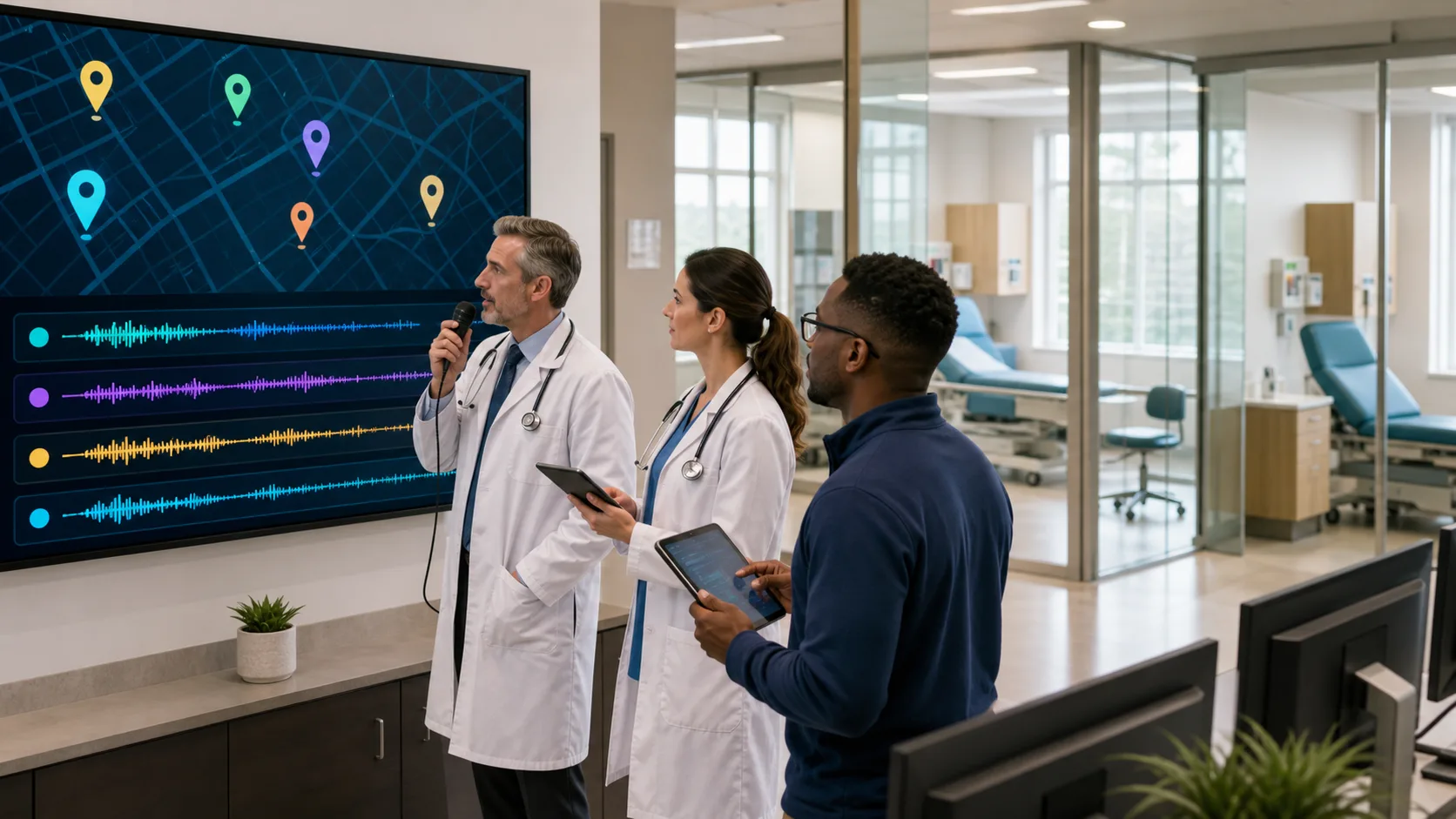
Late summer often feels like a countdown clock for clinics and hospitals. Back-to-school checkups, flu shots, and respiratory bugs all stack up, and suddenly every exam room is full and every clinician is racing the clock. When visit volume climbs, documentation habits get exposed fast. If your medical transcript workflow is slow, clunky, or built around workarounds, it usually shows up as late notes, long evenings, and a stressed-out team.
This is exactly why now is the right time to question how you handle medical transcripts. AI and ambient clinical tools have changed what is possible, yet many of us are still typing by hand or waiting on outsourced transcription. In this article, we will walk through where traditional workflows drag you down, how AI speech recognition resets the bar, and what a future-ready approach can look like before the next busy season hits.
As temperatures cool and kids head back to school, clinics tend to get busier. Coughs, fevers, refills, sports physicals, chronic care follow-ups, they all land on the same schedule. When that happens, old documentation habits usually lead to a familiar pattern: quick notes during the visit, promises to “finish later,” then laptop time after dinner.
The hidden costs stack up, such as:
The big question is simple: with AI and modern speech tools available, why are so many clinicians still tied to manual typing or waiting on slow transcription? Cloud-based medical speech recognition gives us a chance to reset, to bring documentation closer to real-time care instead of trailing behind it.
Traditional medical transcript workflows often look the same across different organizations. A clinician types during or after the visit, or records audio to send to a transcription service. Hours or days later, the transcript comes back. Then comes reviewing, fixing errors, adding missing pieces, and finally signing the note.
That lag affects care in ways that are easy to feel but hard to fix when you are stuck in the same process:
There is also the hidden work behind the scenes. Staff chase missing transcripts, track down corrections, and handle version confusion. Edits can mean more clicks in the EHR, more cut-and-paste, and more back and forth just to produce a note that should have been clear from the start.
On top of that, quality is often inconsistent. Formatting may not match your templates, required fields for compliance or billing might be easy to miss, and every change means another delay. When the whole workflow is built on “we will fix it later,” it is hard to keep up once patient volume rises.
AI-driven speech recognition has grown in speed and accuracy, especially for clinical language. Modern tools are designed around medical vocabularies, clinical phrasing, and the way real providers talk. They can adapt to individual voices over time, which helps support more accurate recognition for each clinician.
Old-school dictation tools often worked like a basic audio typewriter. You spoke, got a rough block of text, then spent extra time editing and formatting. Current cloud-based platforms are different. They live inside your normal apps and EHR workflows, connect to templates, and can support standardized documentation across teams.
The goal is no longer just to get a medical transcript on file. The goal is to create documentation that is:
Trust and safety are part of this shift too. Cloud environments built for healthcare can support HIPAA-ready setups, role-based access, and detailed audit trails. Compared with ad hoc transcription and scattered recordings, this can actually make compliance and oversight easier, not harder.
Real-time speech recognition changes the shape of the workday. Instead of stacking dictations or typing later, clinicians can speak directly into the EHR during or right after the visit. The note takes form as care happens, which can reduce that nagging pile of unfinished charts waiting after clinic hours.
Key workflow improvements often include:
With a cloud-based platform like Nuance Dragon Medical One, those tools can support Windows-based environments across departments. That helps bring a consistent documentation experience, whether clinicians are in primary care, specialty clinics, or other settings. Everyone is working from the same approach instead of each person inventing their own shortcuts.
Mobile flexibility matters too. Secure mobile microphone options let clinicians speak notes at the bedside, during rounds, or between rooms without needing a specific workstation. This kind of freedom becomes especially helpful during busy respiratory seasons, when every minute between visits counts and exam rooms fill quickly.
When you modernize your medical transcript workflow, the impact shows up in both time and outcomes. The first numbers many teams watch are simple: how long it takes to document each visit, how many charts are closed the same day, and how often clinicians feel forced into late-night EHR time.
Those metrics lead to others:
There is also a human side. When documentation feels more natural and less like a second job after clinic, it can ease some of the daily strain. Less clerical work, fewer late-night logins, and more control over the workday can all support staff satisfaction and retention.
Qualitative gains matter as well. Richer narratives help tell the patient’s story more clearly. Consistent templates and structured fields can support quality reporting and value-based care efforts. When your documentation tools match the way care is actually delivered, your notes become a strength instead of a constant catch-up task.
A practical way to start is with a simple internal audit. Map the path from patient encounter to signed note. Where do delays appear? Where do people double-document, retype, or wait on someone else? Those friction points are your best targets for AI speech recognition and workflow tweaks.
Many organizations find it helpful to phase in change. A small group of clinicians can pilot real-time speech recognition, give feedback on templates, and help adapt workflows for their teams. From there, it becomes easier to roll out across more service lines with real-world lessons in hand.
At DragonMedical.One, we focus on helping organizations build these AI-ready workflows around Nuance Dragon Medical One, supporting Windows environments across care settings. With the right training and support, clinicians can start to see benefits quickly, long before the next busy season hits. When fall and winter volumes rise, the goal is simple: more focus on patients, less time wrestling with medical transcripts.
If you are ready to streamline charting and reduce after-hours paperwork, our medical transcript solution is built to fit seamlessly into your daily routine. At DragonMedical.One, we focus on accuracy and speed so you can spend more time with patients and less time typing. Reach out through our contact page, and we will help you choose the setup that aligns with your practice needs.